0%
Case Study | Mobile Application
HearHopper
Role

Lead Product Designer

Responsibilities

Product Strategy, UX Research, Information Architecture, Wireframing, UI Design, Design System Development, Interaction Design, Prototyping, and Visual Design.

Timeline

13 Weeks

Goal

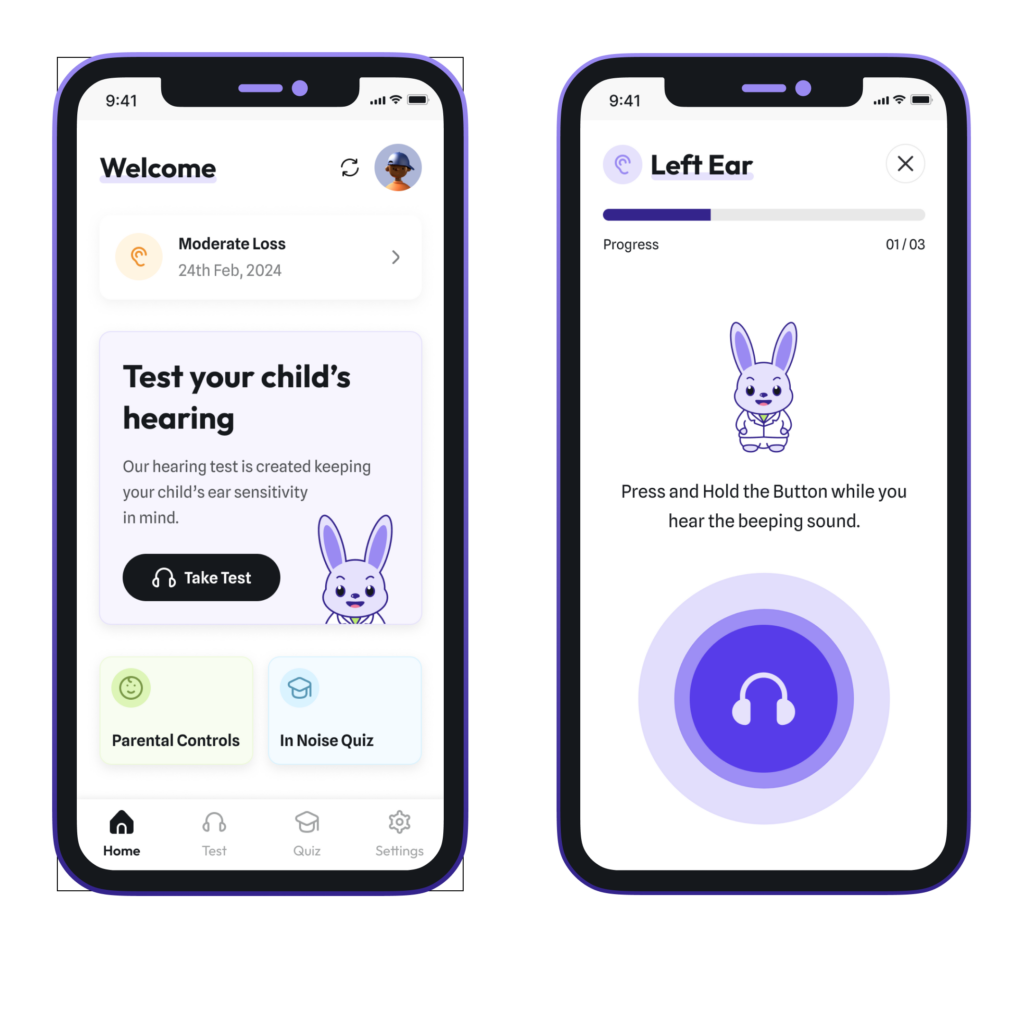
HearHopper aims to help parents monitor their child’s auditory health through a simple and accessible digital experience. The product focuses on enabling early awareness, reducing dependency on frequent clinical visits, and supporting children’s learning and development through guided, interactive tools.

The Problem

Parents often struggle to consistently monitor their children’s auditory health. Regular clinical visits are time-consuming, expensive, and not always accessible. There is a lack of simple, user-friendly tools that allow parents to track auditory health at home in a reliable and understandable way.

Key Challenges

➤ No continuous tracking system
➤ High dependency on clinics
➤ Lack of awareness and early detection tools

User Research & Insights

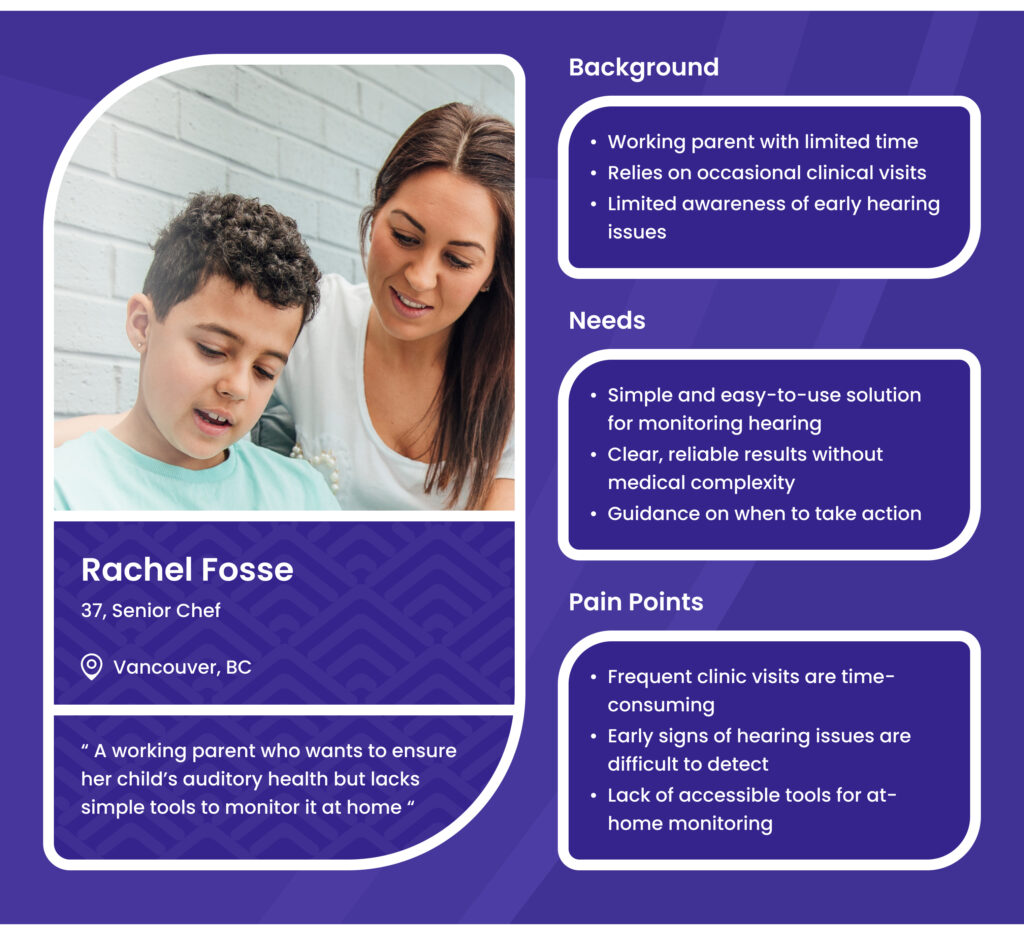
Primary Users

Children aged 2–12 interacting with guided auditory tests.

User Insights

➤ Children need simple, engaging, and easy-to-follow interactions.
➤ Parents need clear, reliable results they can trust.
➤ The experience must balance playfulness with credibility.

Secondary Users

Parents monitoring results and making healthcare decisions

Audiologist Insights

➤ Early signs of hearing issues are often missed.
➤ Accurate testing depends on controlled environments.
➤ Guidance is required to ensure reliable results at home.

The Key Insight we acknowledged was designing for children requires simplicity and engagement, while parents require clarity and trust — making it essential to balance usability with credibility.

The Solution

HearHopper, a mobile application designed to help children interact with guided auditory tests, while enabling parents to monitor and understand their child’s auditory health through a simple and intuitive experience. The solution focuses on balancing engagement for children with clarity and trust for parents, ensuring that the experience is both easy to use and meaningful.

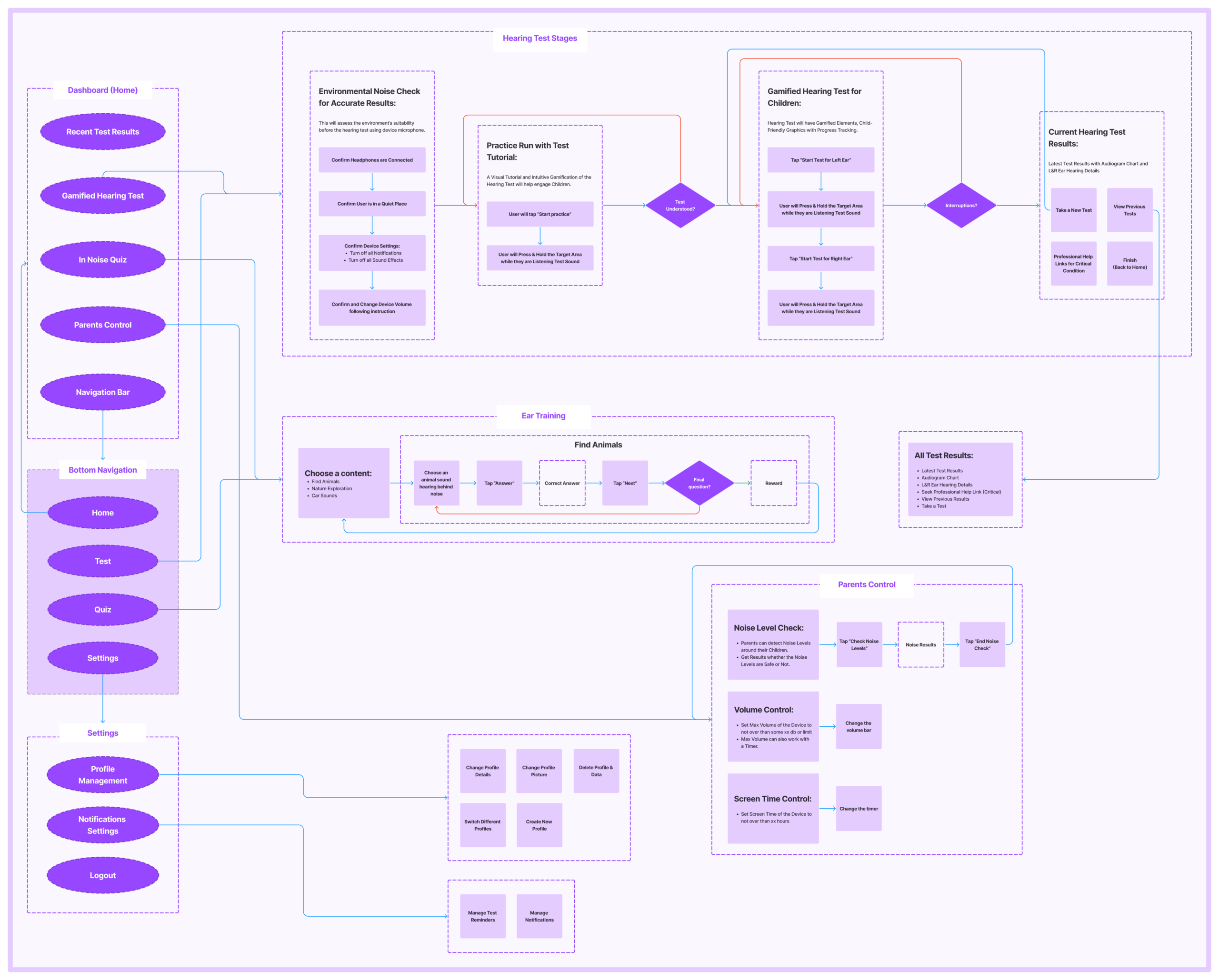
User Journey Map

The following flow illustrates how children interact with the auditory test while parents monitor results and insights.

Features

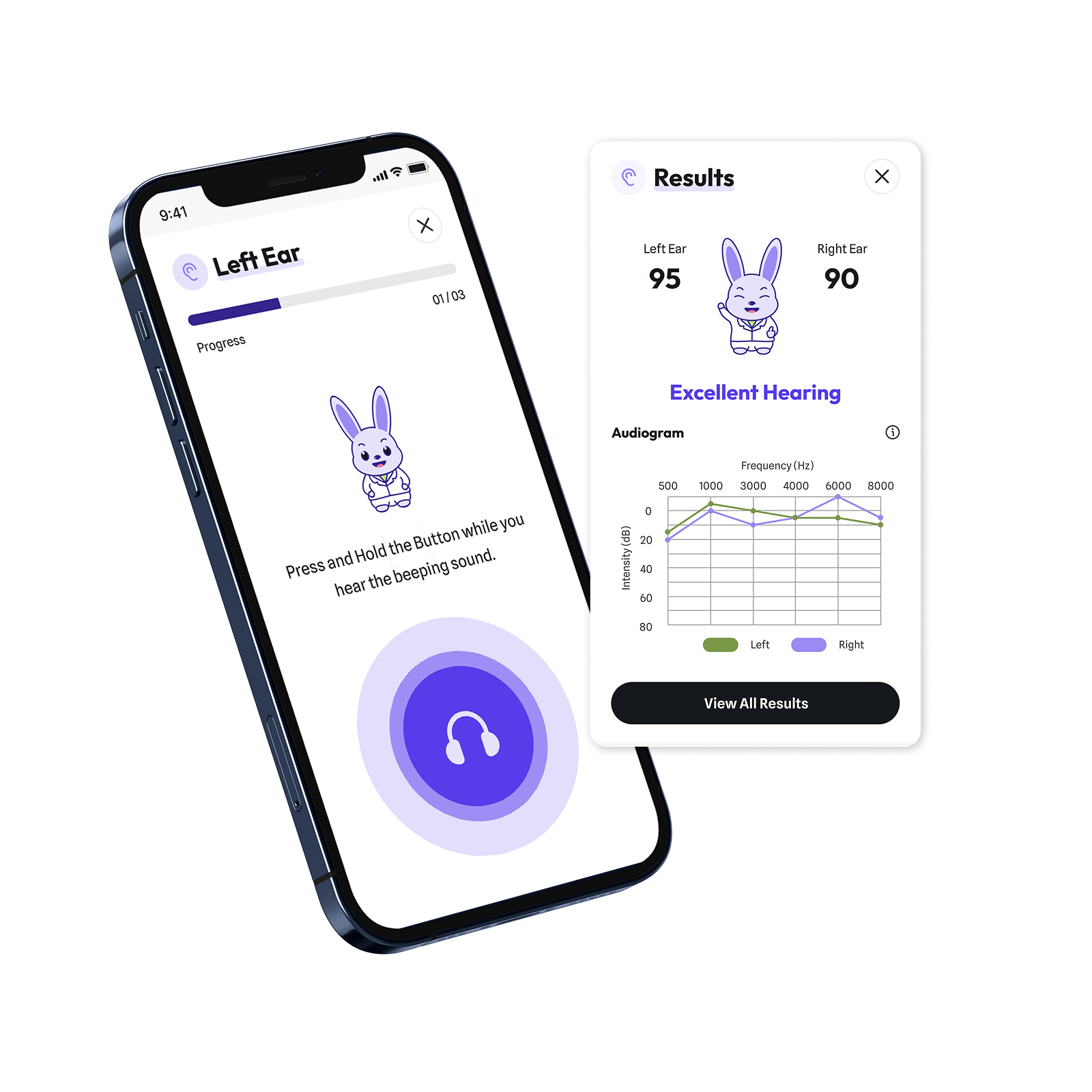
Guided Auditory Test

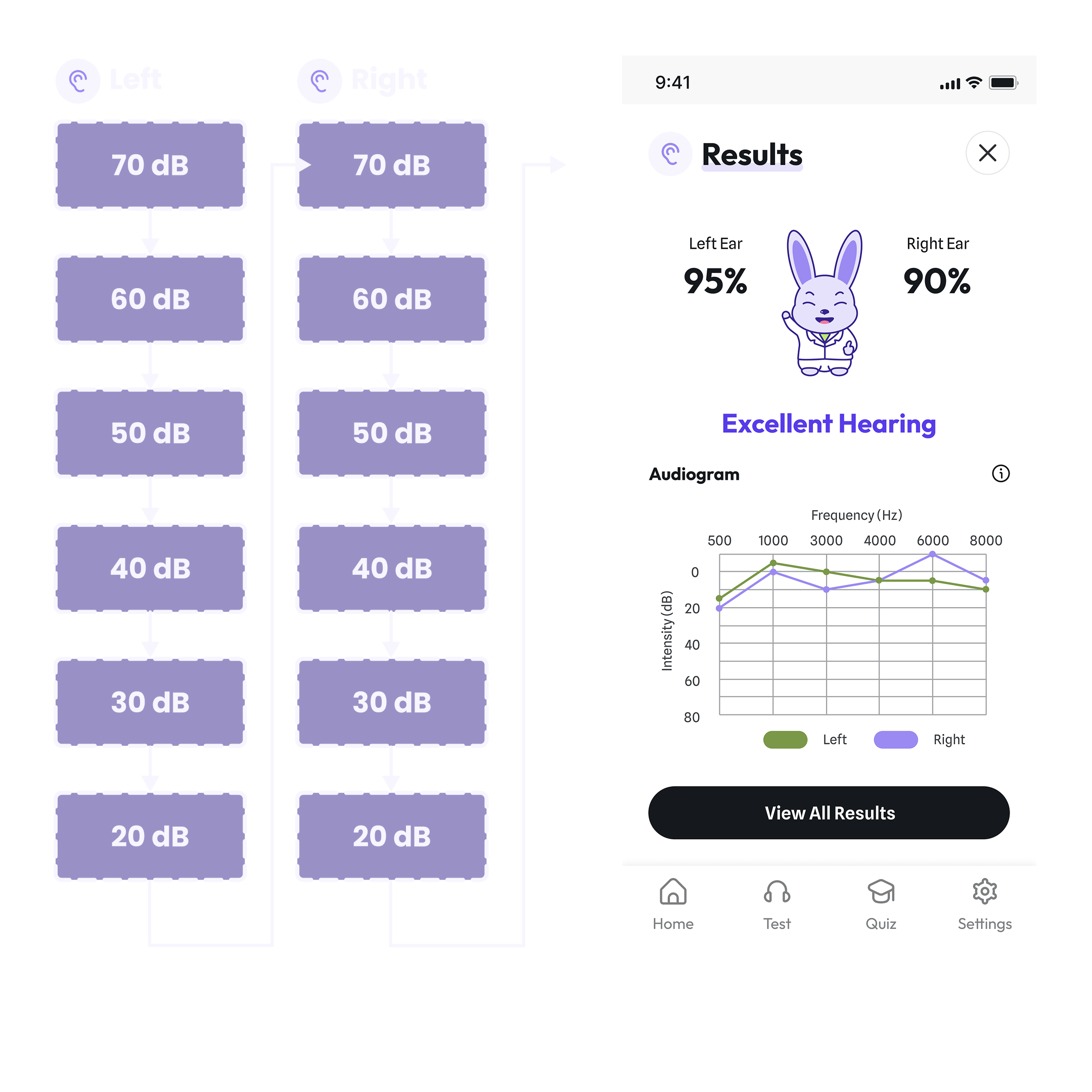
A simplified pure-tone hearing test designed for children to detect early signs of hearing loss. The experience adapts standard audiometry methods into an easy and safe interaction, ensuring accurate results without overwhelming the user.

Parallax Image
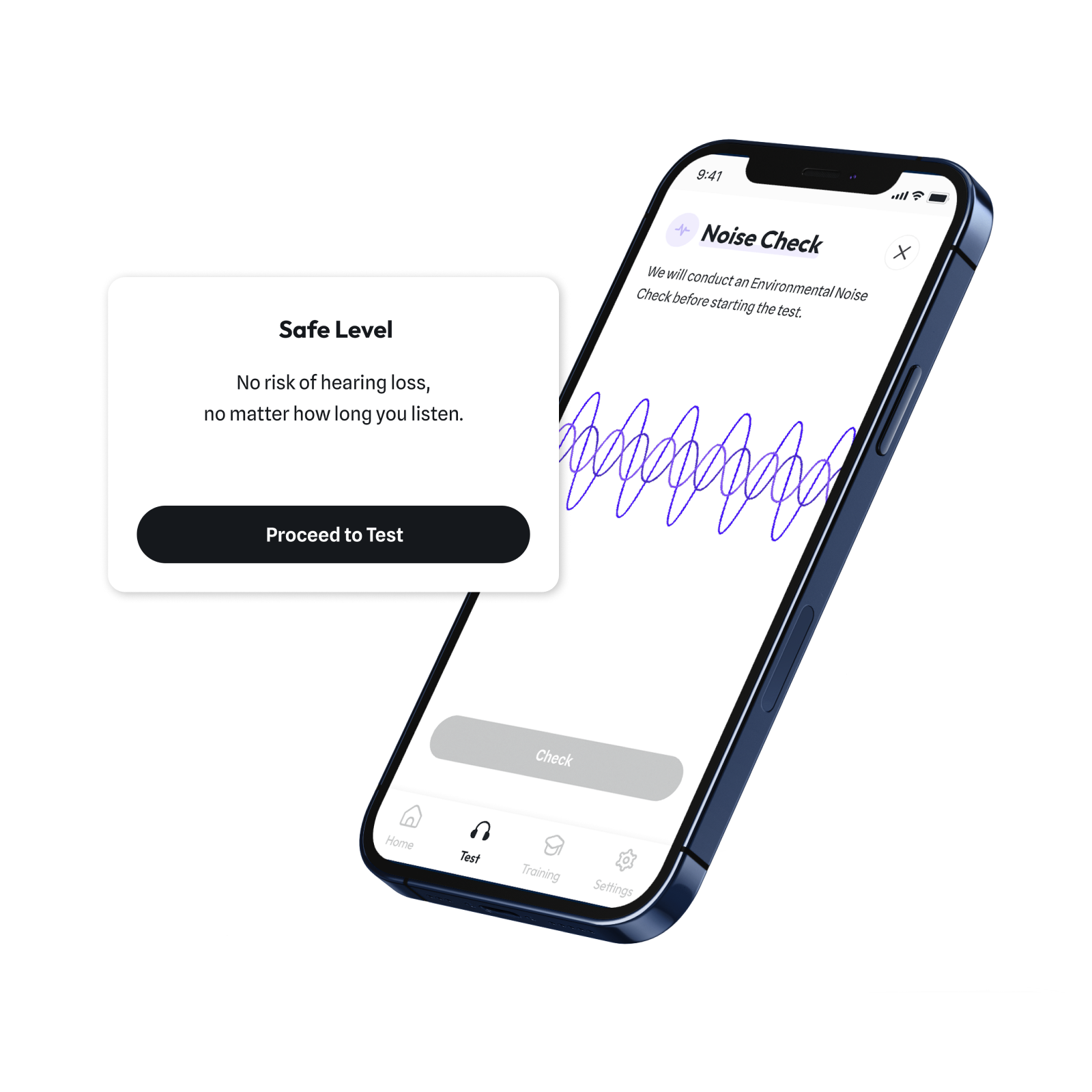
Environmental Noise Check

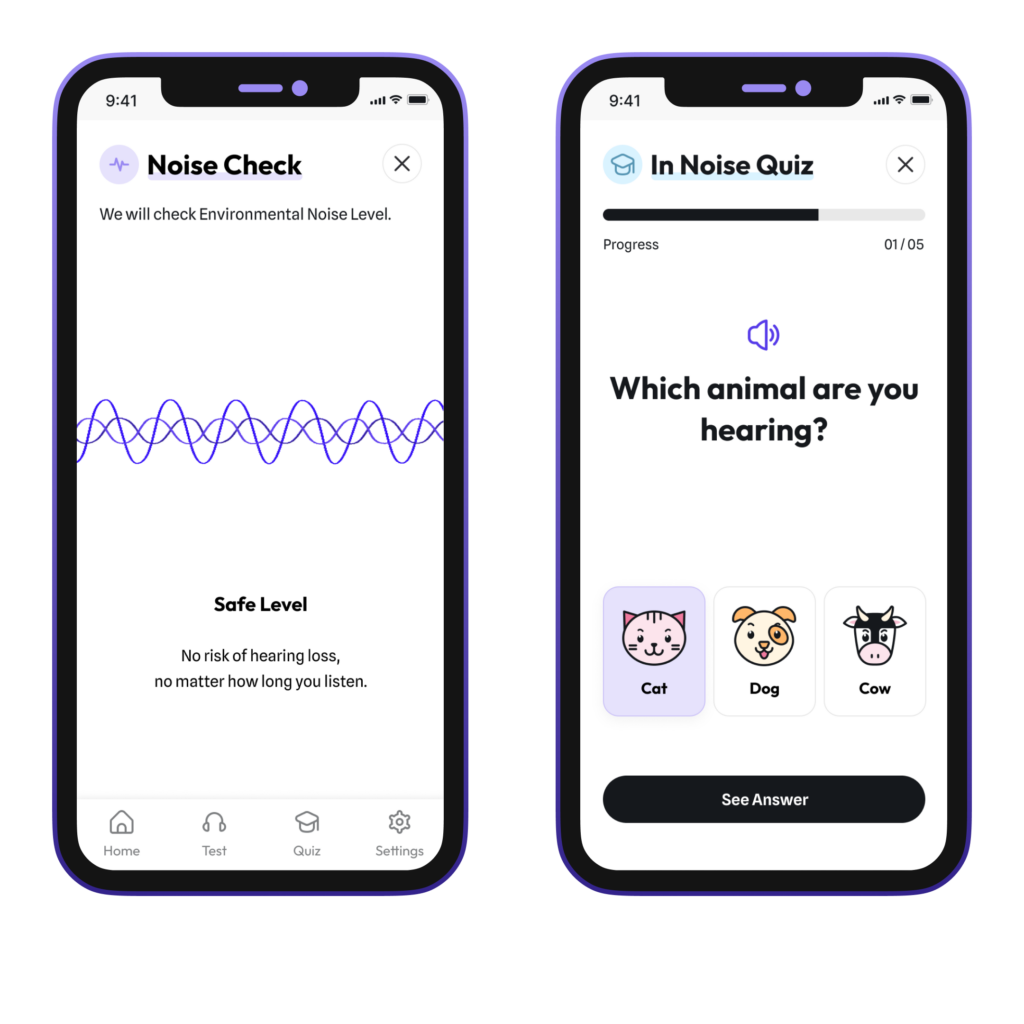
Analyzes surrounding noise levels before testing to ensure accuracy and safety. Helps parents understand environmental risks and take proactive steps to protect their child’s hearing.

Parallax Image
Ear Masking Training

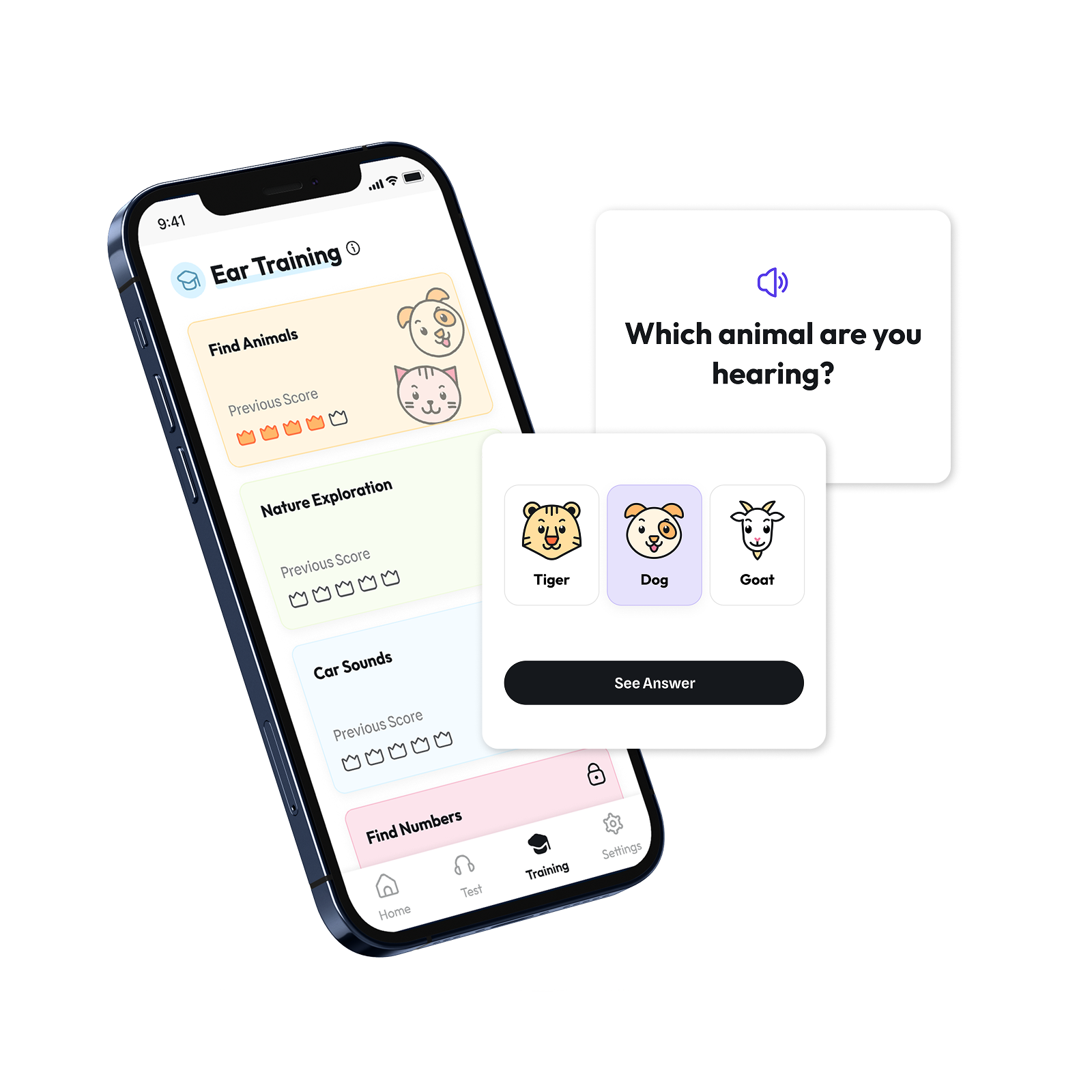
Interactive listening exercises that help children focus on identifying sounds in noisy environments. Simulates real-world conditions to improve functional hearing ability.

Parallax Image
Progress Tracking & Profiles

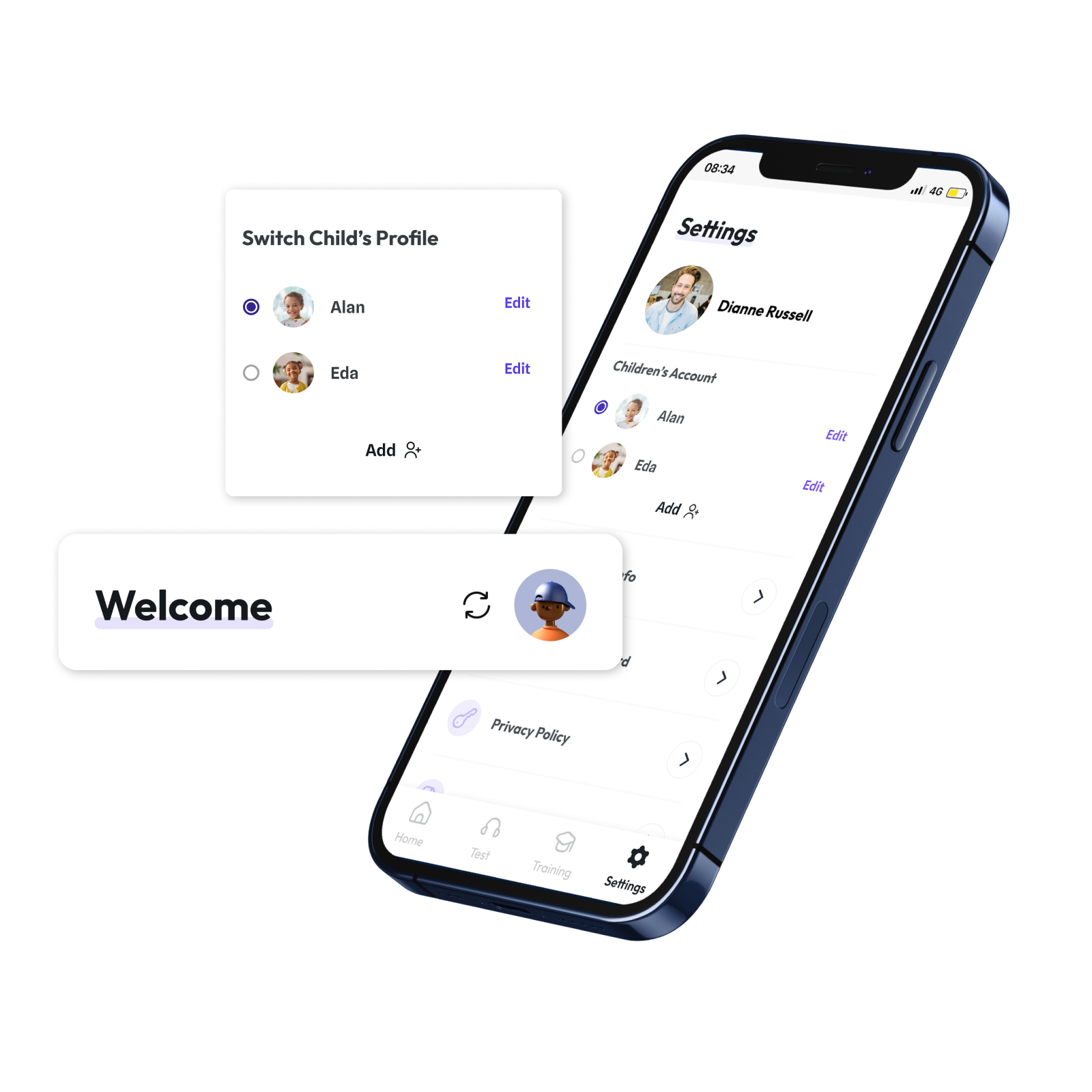
Allows parents to monitor hearing performance over time and manage multiple child profiles. Provides clear insights to identify patterns and take timely action.

Parallax Image

Design Decisions & Process

Simplicity & Usability

The challenge was to design an interaction that children can easily understand and complete without confusion or errors.

The initial interaction relied on a gesture-based input, which introduced friction and made the experience difficult to follow, especially for younger users.

Guided Interaction Design

The interaction was redesigned into a guided, single-tap experience that simplifies user actions and reduces cognitive load.

This approach removes unnecessary complexity, allowing users to focus on listening rather than figuring out how to interact.

As a result, the experience becomes more intuitive, accessible, and reliable for children.

Clarity in Results

The challenge was to make hearing test results understandable for both children and parents.

Earlier, results were presented as a combined graph, making them difficult to interpret and less actionable. The redesigned experience separates results for each ear and introduces a simplified scoring system, allowing users to quickly understand hearing performance through clear visual feedback.

Simplified Scoring System

To improve clarity, a simplified scoring system was introduced to translate hearing thresholds into an easy-to-understand percentage score.

This allows parents to quickly interpret results without needing medical knowledge, while maintaining accuracy.

Iteration In Practice

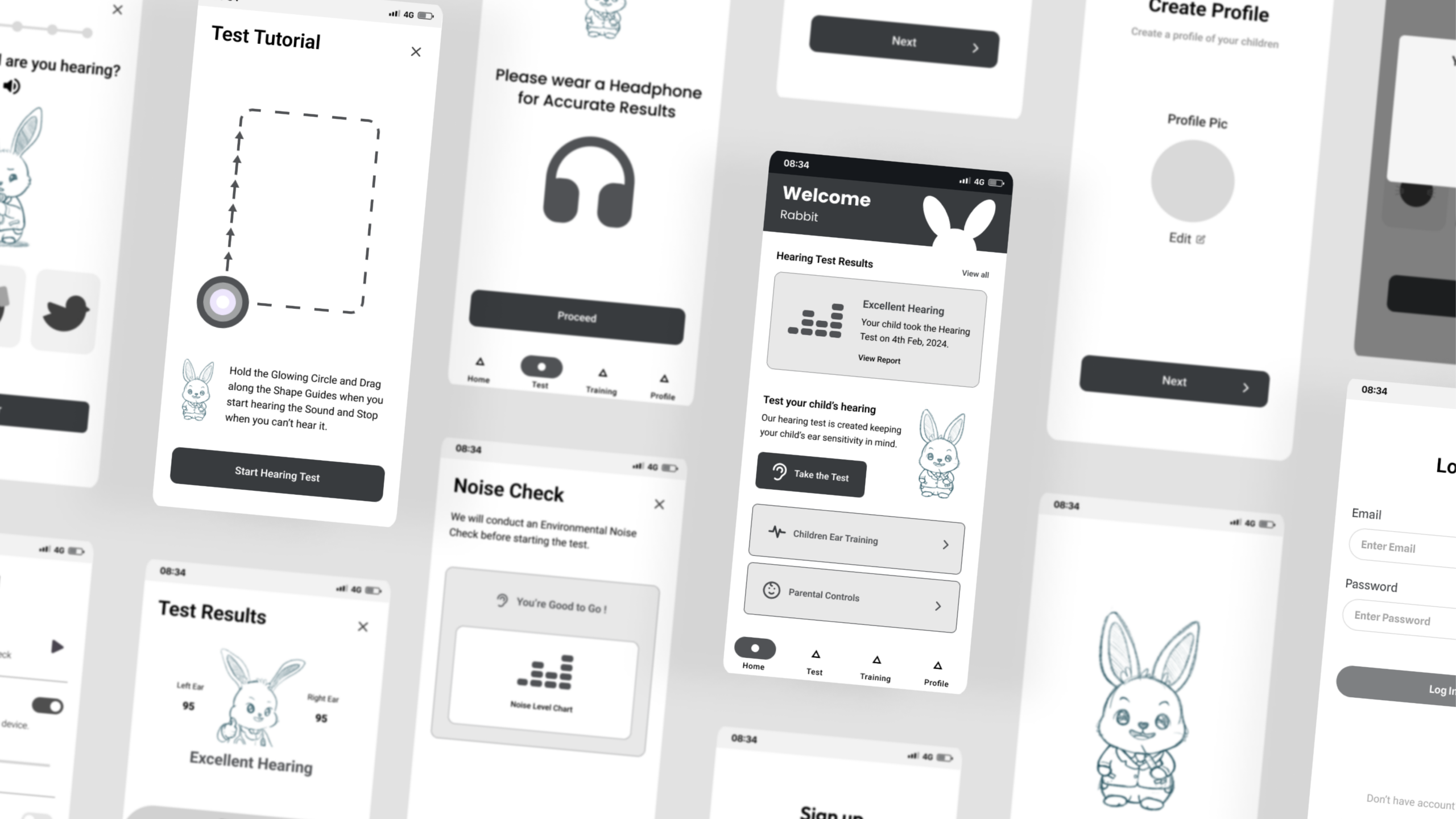
Early wireframes were refined by simplifying flows, reducing unnecessary steps, and improving interaction clarity to better suit children’s usability needs.

Parallax Image

Visual Design System

Hopper The Mascot

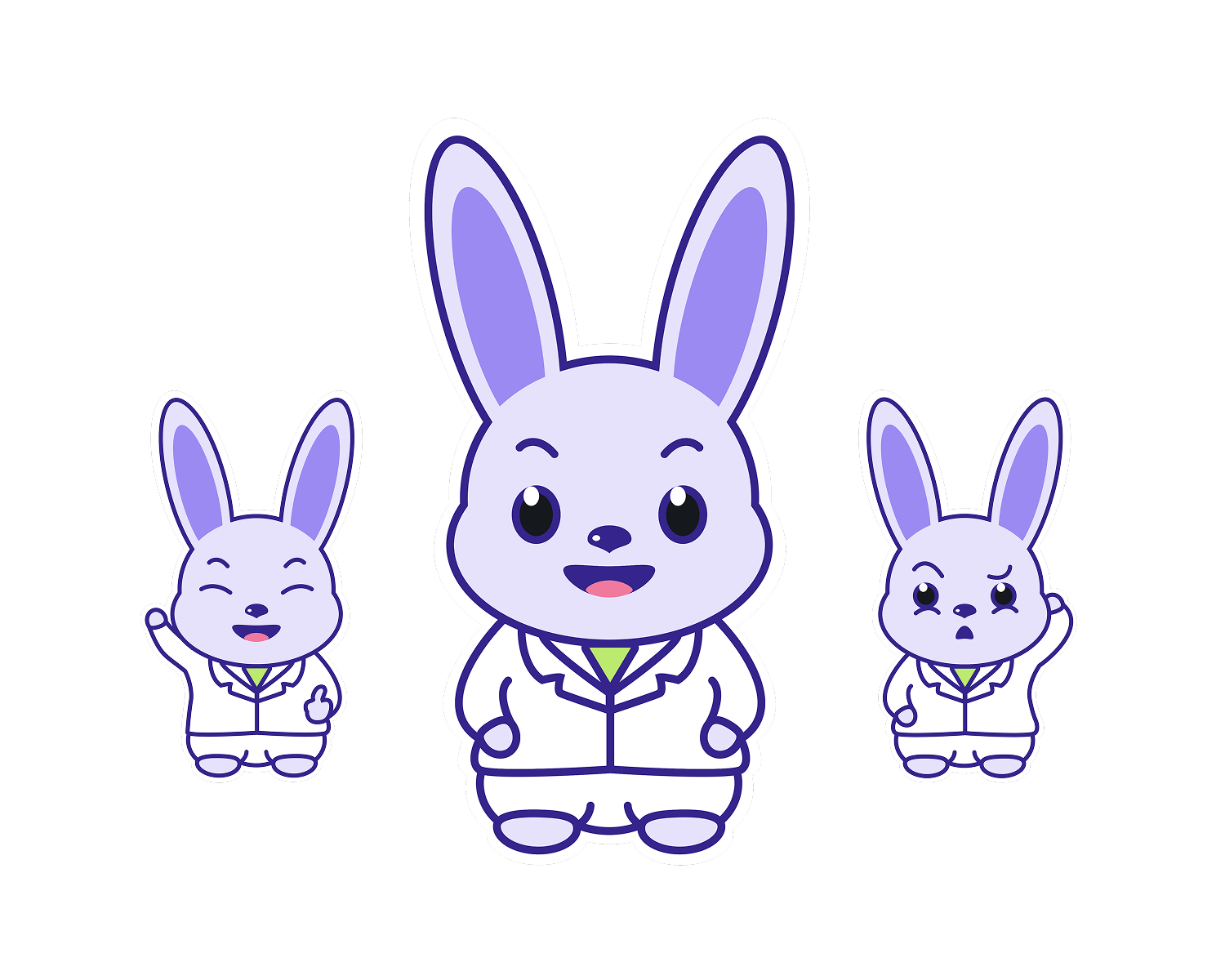
A friendly bunny doctor designed to make the experience approachable and engaging for children while reinforcing trust for parents.

Parallax Image
Motion & Interaction

Lightweight animations and interactions were used to guide attention and add a playful, engaging layer to the experience without distraction.

Logo

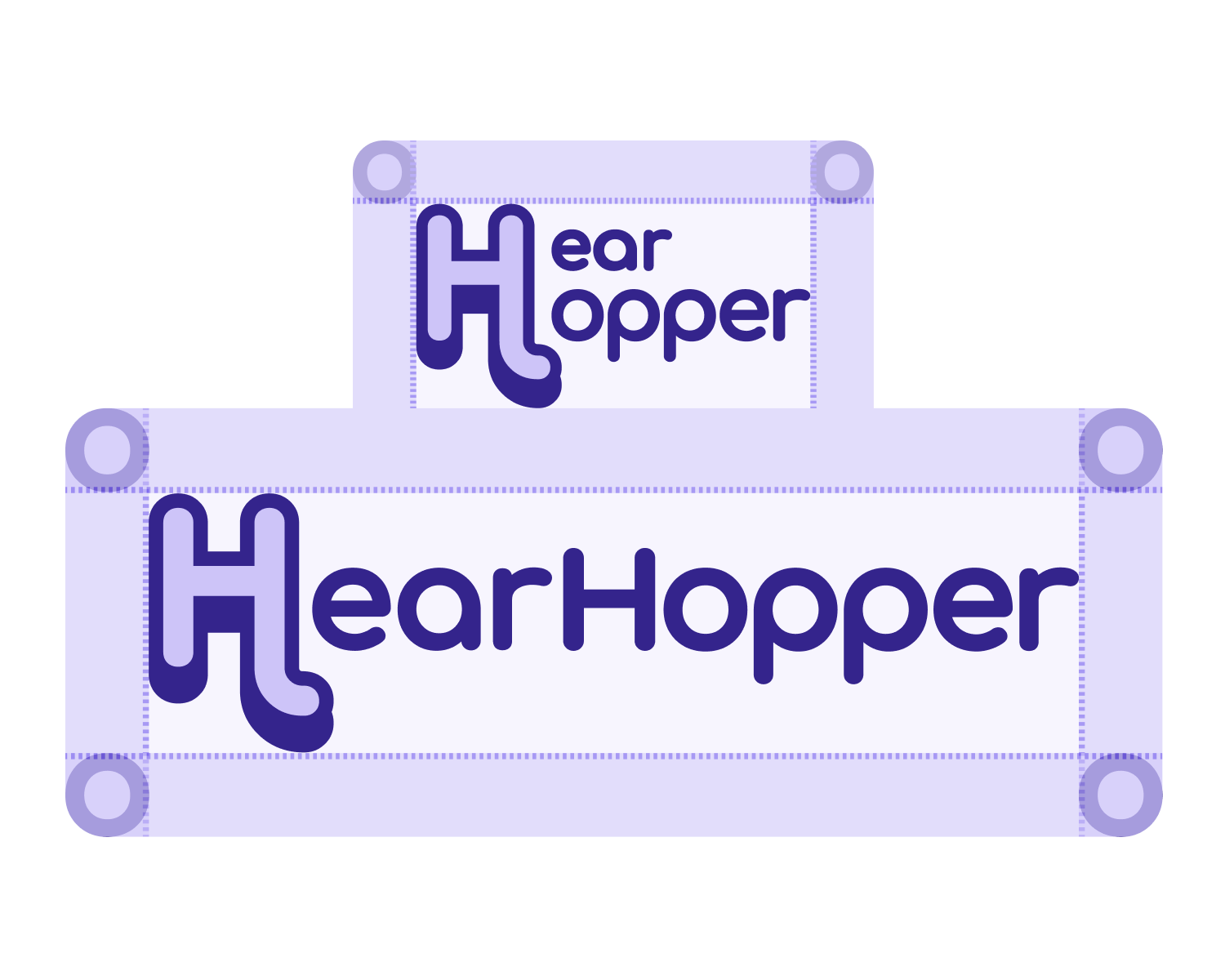
A stacked logotype where the curved “H” subtly forms a bunny ear, visually connecting the brand to its mascot and playful identity.

Parallax Image
Typography & Color

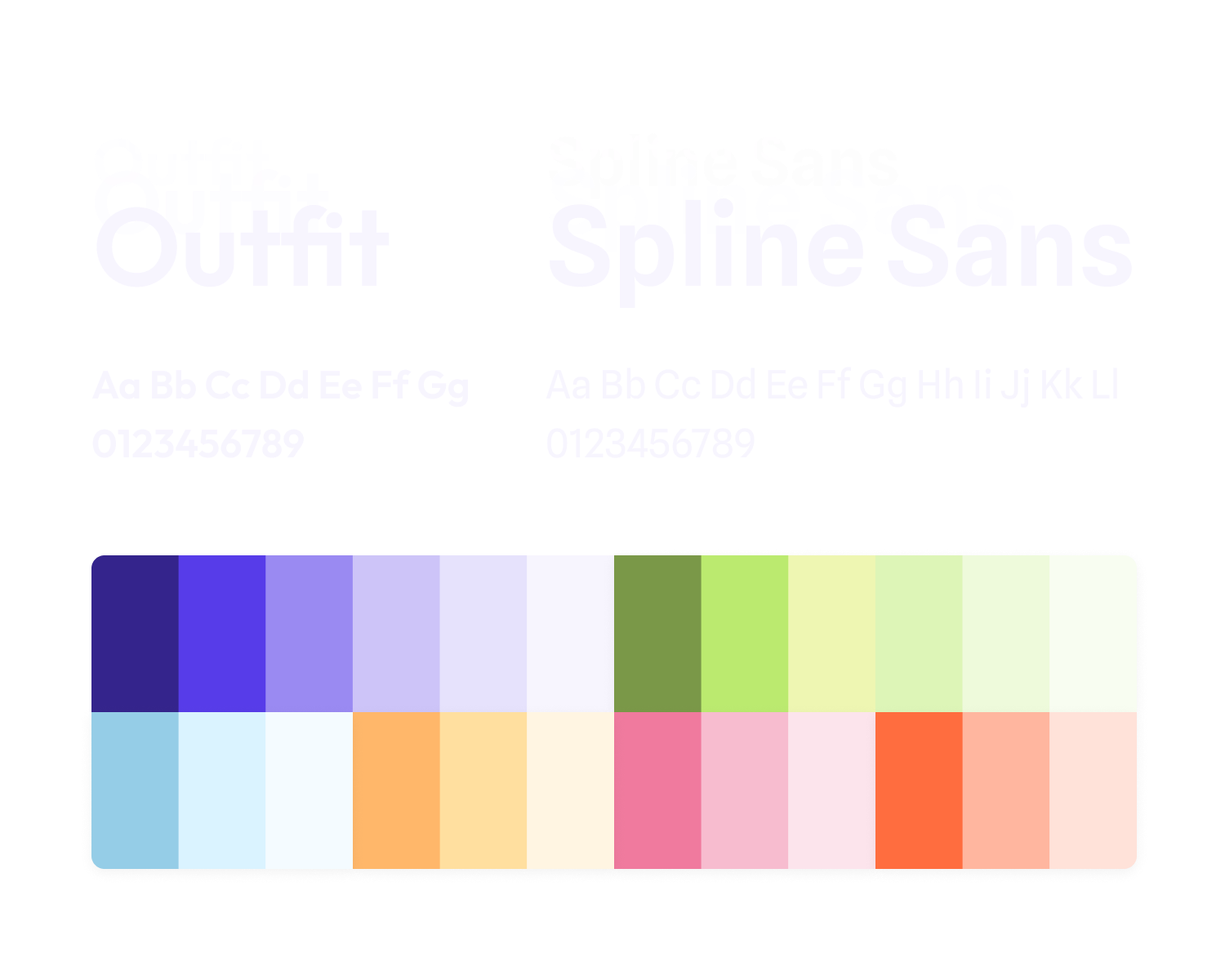
Outfit is used for headings to create a bold and friendly presence, while Spline Sans ensures clarity and readability for longer content.

A soft, playful color palette complements the typography, balancing engagement for children with clarity and trust for parents.

Parallax Image

Final UI

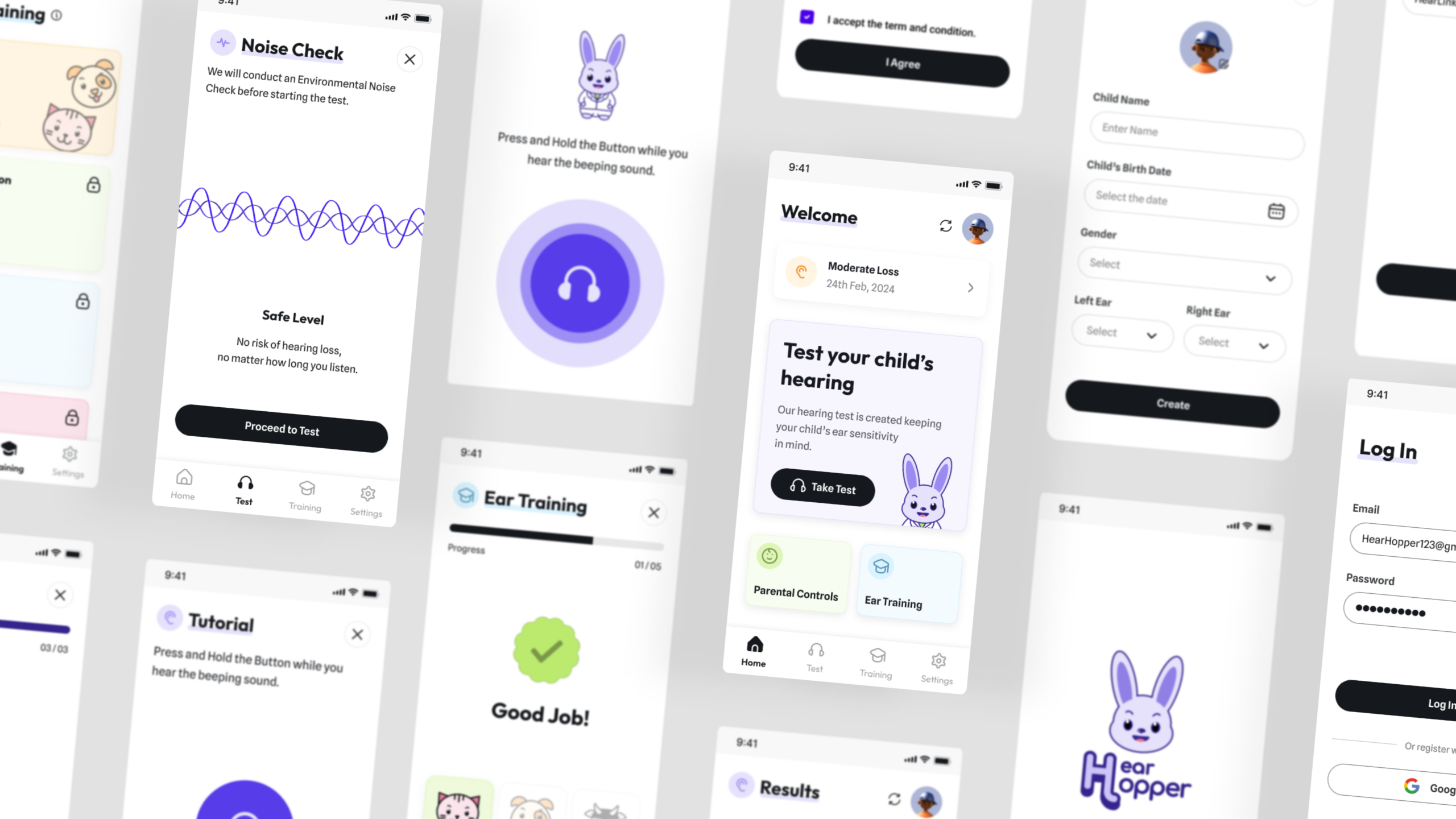
The final design delivers a clean and intuitive experience that simplifies auditory health tracking while remaining engaging for children and clear for parents.

The interface focuses on clarity, guided interactions, and accessible feedback to ensure both usability and trust.

Parallax Image

Recognition

HearHopper was awarded the “Market-Ready Marvel Award” at the Langara College Capstone Showcase for its innovative and practical approach to children’s auditory health.

This recognition highlights the product’s potential as a real-world solution designed to support parents in monitoring and understanding their child’s hearing health.

Built in collaboration with a multidisciplinary team of designers and developers as part of the WMDD program.

Impact & Reflection

HearHopper translates complex auditory health data into a simple and actionable experience, enabling early awareness of potential hearing issues and reducing dependency on frequent clinical visits.

Designing for children required simplifying interactions while maintaining accuracy and trust for parents, shaping a balance between engagement and clarity.

This project strengthened my ability to design for sensitive healthcare contexts and approach problems with both user empathy and system-level thinking.

If I had more time, I would focus on:

➤ Conducting real user testing with parents and children
➤ Improving the accuracy and validation of auditory testing
➤ Expanding the solution into a broader healthcare monitoring system

Back To Top